

February 05, 2022
London-Edinburgh-London (LEL) 2022
The 9th edition of the iconic London-Edinburgh-London cycle ride will be taking place 7-12 Aug 2022. It's been 5 years since the event last happened and I've taken the opportunity to put together my personal account of the ride along with advice and tips on how to ride further than you ever might imagine.
Cycling at the Speed of Life!: A Practical Guide to Long Distance Riding

June 10, 2017
LOMO 15L Waterproof Bike Trunk/Rack Bag
I came across this bag whilst look for something suitable for an upcoming 5 day tour. It was the first time I'd heard of the brand LOMO, it transpires they are a Glaswegian company who specialise in clothing and equipment for watersports. The first surprise is that this bag retails for just £29.99, less than a third of the smaller Ortileb Trunk Bag! Secondly, despite weighing in at only ~650g including fixings, the 15L LOMO has taken all of my kit for the ride including a full set of civvies, spare tubes and tools with ease.


I particularly like the method of attaching to the rack which utilises 2 Velcro webbing straps that attach to the rack independently of the bag which is then fastened to the straps with quick release fasteners attached to the bag, this allows the bag to easily and quickly removed from the rack.
There's a nice video on the website that shows how it all works. https://www.ewetsuits.com/acatalog/dry-bike-tail-bag.html
My photos show the bag fitted to a Tortec expedition rack which matches the footprint of the bag perfectly. Workmanship and quality appear to be very good and I have no doubt at all that the main compartment is 100% waterproof.
I am really impressed, the LOMO has the potential to be the do it all bag for commuter, audaxer, tourer and bikepacker alike.
I particularly like the method of attaching to the rack which utilises 2 Velcro webbing straps that attach to the rack independently of the bag which is then fastened to the straps with quick release fasteners attached to the bag, this allows the bag to easily and quickly removed from the rack.
There's a nice video on the website that shows how it all works. https://www.ewetsuits.com/acatalog/dry-bike-tail-bag.html
My photos show the bag fitted to a Tortec expedition rack which matches the footprint of the bag perfectly. Workmanship and quality appear to be very good and I have no doubt at all that the main compartment is 100% waterproof.
I am really impressed, the LOMO has the potential to be the do it all bag for commuter, audaxer, tourer and bikepacker alike.
May 01, 2016
Just Ride - by Grant Petersen
 If you're thinking about buying a full carbon road bike and all the gear to go with it in pursuit of cycling pleasure, then read this book first. It'll save you a whole load of cash, pain and disappointment whilst showing you how to really enjoy cycling as a recreational pursuit. I've been cycling just about as long as the author has and have independently come to many of the same conclusions explained in this book. So save yourself 40+ years of trying to get it right and learn how much enjoyment there can be in not pretending to be like a road racing pro.
The author Grant Petersen is a bicycle designer and the founder of Rivendell Bicycle Works. He was U.S. marketing director for Bridgestone Cycle (U.S.A.), Inc. during the 1980s and 1990s, where he designed the XO series of bicycles.
If you're thinking about buying a full carbon road bike and all the gear to go with it in pursuit of cycling pleasure, then read this book first. It'll save you a whole load of cash, pain and disappointment whilst showing you how to really enjoy cycling as a recreational pursuit. I've been cycling just about as long as the author has and have independently come to many of the same conclusions explained in this book. So save yourself 40+ years of trying to get it right and learn how much enjoyment there can be in not pretending to be like a road racing pro.
The author Grant Petersen is a bicycle designer and the founder of Rivendell Bicycle Works. He was U.S. marketing director for Bridgestone Cycle (U.S.A.), Inc. during the 1980s and 1990s, where he designed the XO series of bicycles.
January 04, 2016
A Ride for Zeke!
A ride across London with Alice spelling out the name of our Grandson Zeke. Thanks to all our friends and colleagues for donating to CLIC Sargent who have been such a support to Zeke and family since his recent diagnosis.
August 12, 2014
Windsor Chester Windsor - 600 AUDAX BRM - AUG 2014 - (a very strange affair)
 |
| My long distance cycling buddy |
The route had been modified from the original to avoid main roads that have now become too hazardous for cyclists. With controls placed at Eynsham, Chipping Campden, Belbroughton, Muxton, Chester, Upton Magna, and Chalgrove the route took in the very best of rural Berkshire, Oxfordshire, Cotswolds, Staffordshire, Worcestershire and Cheshire.
Although I've become reasonably comfortable in completing 300km rides, I purposefully avoiding any sort of training beyond 300km. So it was a true adventure in the sense that as I set off from Windsor with the other 70 odd riders, I was not entirely certain if the outcome would be a success.
The outbound 300km to Chester was a blast, aware of all of the pitfalls that can scupper a long ride, I arrived at the control in reasonable shape. At one point during the final run towards Chester I thought that maybe I was more tired than I felt when I shouted "frogs!" for the group to avoid a mass amphibious road crossing. It was later confirmed that I wasn't hallucinating and that there was indeed a nocturnal frog road crossing activity. However to later find this photograph of me asleep in the Chester control with other riders and a teddy bear does confirm the fact that night riding can be a very strange affair indeed.
 |
| a very strange affair... |
Getting back on the bike was not as nearly as painful as I'd expected, but exactly as I had expected it began to rain in biblical proportions. My extravagance earlier in the year in buying the best in full waterproofs was now justified and I couldn't help feeling
The final stages back to Windsor were a slog, but the rain stopped for long enough to pack the goretex away and the AUK gods took more pity and provided an astonishing tailwind up and over the Cotswolds into the familiar terrain of South Oxfordshire. My back tyre had become prolapsed following a reckless descent on a rutted road and was the only thing that threatened to prevent me from finishing within the 40 hour time limit. A fellow rider at Chalgrove, had given me his tyre repair boot in a typical act of selfless Audax generosity, but by now my arms felt they had lost the strength to effect any sort of repair, so I offered a quick prayer to Saint Vittoria and promised that I would forever buy her tyres, if only this one did not let me down. And it didn't.
 |
| Arrivée at Chester - 38hrs 20 mins |
With sincere thanks to Keith Harrison and Sue Gatehouse for organising this ride, all of the "saints", all fellow riders and Audax UK
 |
| The Route - Click here for more detail |
June 26, 2014
Sightseeing in London By Bike
62 Miles of great riding and sightseeing by bike. Here are my pictures from the London Sightseer 100km Audax ride.
 |
| View from the Emirates Cable Car across the Thames |
 |
| The Route |
September 19, 2013
Graeme Obree Sets Prone Cycling World Record
This story should not be overshadowed by Wiggo and the Tour of Britain. This is a tale of British ingenuity and cycling at its best... or should that be beast?
Graeme Obree Sets Prone Cycling World Record

April 12, 2013
The Long Way Home - "3 Down" Audax 300km - 6 Apr 2013

This was my 4th calendar event and I was getting used to the pre-ride drill the night before of generally faffing about with the bike, double checking the gps and making up rations. I try and aim only to take essentials like tools, tubes and food but do find room for a few luxuries like my camera and mp3 player. The latter might surprise a few people but I do find listening to music or the radio through a single open earpiece to be completely safe and does help to get through those times when the weather or terrain conspire against you . It is also really useful in preventing a random and annoying song getting stuck in your head for hours on end... Lena Del Rey has a lot to answer for.
I headed off with the first riders at 6am on the 300km “long way home” with thoughts of reaching my destination just 30km from the start at Chalfont St Peter at some time before the early hours of Sunday morning. I had set the gps to display distance traveled rather than distance to destination, this way it is easy to check distance to the next control stage. Audax control points tend to be planned at 50 km intervals and this was true for the first control at Little Henry’s Café at Pangbourne.
 |
| Bozedown Alpaca Farm - Whitchurch |
 |
| Control Point at Little Henry's - Pangbourne |
 |
| Kimbridge - photo by Mike Hecken |
 |
| New Forest Ponies |
 |
| Arlesford's infamous toilet |
February 01, 2013
A Challenge Too Far
The prospect of entering this year's London-Edinburgh-London 1400km epic was an enticing one. It only happens every 4 years and being coincident with my 50th year it almost seemed to be a message from the gods that I should enter. However the inescapable fact of this ride is that it constitutes 4 consecutive days of riding 300km followed by a 200km ride on the 5th day.
In July last year I completed my longest ever journey within a 24hr period; riding a distance of 320km in an overall time of 22 hours. If this was the LEL it would have meant that I would have had less than 4 hours sleep before setting off and doing the same distance again and then again and then again before the final 200km. If there's one thing to be said about sports tracking tools like endomondo, it is that they preserve the reality of a ride, long after the hardships have been forgotten. As I recall that ride now, it all went perfectly and despite the constant 10-12mph headwind I felt that I made swift progress throughout, however the stats below show how the final climbs through Devon devoured my average speed... and there's plenty of hilly stages on the LEL. So, by the time entries for the LEL opened in January I had decided that the challenge for me far outweighed the potential for enjoyment and so gracefully chickened out.
Good luck to the 1000 riders who are madder and faster than me and to all of the volunteers. The LEL is a fantastic feat of organisation and a credit to British Cycling!
January 28, 2013
The Willy Warmer
It was only by the expressions on other peoples faces when I mentioned that I had entered an event called the "Willy Warmer", that the realisation that I'd slipped even further into the unquestioning and accepting underworld of distance cycling dawned on me. It was some time later that I learnt that "The Willy Warmer", a 200km Audax winter ride, got its double entendre of a name from its promoter the Willesden Cycling Club.
I have to say that I wasn't hugely disappointed when then the ride initially got cancelled following the first snowfall of the year. It's one thing to register online for a winter audax ride from the comfort of your armchair by the fire,large glass of port close at hand, to dragging yourself out of bed in the early hours of a Saturday morning in January and actually getting on your bike.
And so, when it was announced that the ride would be rescheduled for the following week with the option of a shorter ride in the form of a 120km "Brevet Populaire" I was enticed, even thought it did mean that I was about to sign up for "The Little Willy"! Even more enticing was that the arrivee for the ride would be "Halls Patisserie" in Chalfont St Peters with the promise of a tasty snack to start the day. Halls did not disappoint and was able to summon up a noteworthy hot sausage bap at 7:30 on Saturday morning . However, eating a sausage bap in a tiny cafe in close proximity to a bunch of blokes wearing tights, some of whom that were clearly wearing three socks and about to do something called a willy warmer, is not an entirely conducive to a comfortable dining experience.
As there was clearly no plans for a mass start I set off alone in pursuit of the Little Willy. The route had been well planned to avoid roads that might be affected by the winter weather and despite being largely on my home turf I found myself on many stretches that I'd not cycled before. The first control was at the "Lou La Belle" cafe in Pangbourne which conspired against me by having changed its name, for sure there was a cafe named "Little Henrys" en-route in Pangbourne and full of cyclists but I never connected the two and left in a state of confusion looking for the elusive Lou La Belle.
The second control was at the far less evocatively named "Sainsburys" in Winnersh. Again I failed to check-in to the control, but this time it more an act of defiance; the choice being a grim supermarket sandwich or a splendid English Breakfast at the Lockley Farm Coffee Shop at Arborfield.
By this time I was well and truly in familiar territory and how tempting was the fact that I was only 5 miles from home. But to shorten the already little Willy would have been in excusable, so with a fair tailwind and some welcome winter sunshine I pressed on for the last 20 miles. Apart from the splendid breakfast there were few new photo opportunities, but I did have to stop and snap this picture of the Castle Inn at Hurst noticing the old Cyclists Touring Club Winged Wheel on the facing wall.

 Arriving back at Halls Patisserie it seemed foolish not top off the days calories with another French delicacy that is a wedge of bread pudding. This time I observed the rules and obtained proof of arriving at the control with a cashpoint receipt, though it remains to be seen whether my previous transgressions at controls shrivel my chances of being awarded the most coveted "Brevet de Petit Guillaume"!
I have to say that I wasn't hugely disappointed when then the ride initially got cancelled following the first snowfall of the year. It's one thing to register online for a winter audax ride from the comfort of your armchair by the fire,large glass of port close at hand, to dragging yourself out of bed in the early hours of a Saturday morning in January and actually getting on your bike.
 |
| Baptastic! |
As there was clearly no plans for a mass start I set off alone in pursuit of the Little Willy. The route had been well planned to avoid roads that might be affected by the winter weather and despite being largely on my home turf I found myself on many stretches that I'd not cycled before. The first control was at the "Lou La Belle" cafe in Pangbourne which conspired against me by having changed its name, for sure there was a cafe named "Little Henrys" en-route in Pangbourne and full of cyclists but I never connected the two and left in a state of confusion looking for the elusive Lou La Belle.
 |
| "The Rooster" All day Breakfast at Lockley Farm! |

 Arriving back at Halls Patisserie it seemed foolish not top off the days calories with another French delicacy that is a wedge of bread pudding. This time I observed the rules and obtained proof of arriving at the control with a cashpoint receipt, though it remains to be seen whether my previous transgressions at controls shrivel my chances of being awarded the most coveted "Brevet de Petit Guillaume"!
January 13, 2013
A grand ride on a grand morning!
Small preparation for next Saturday's Willy Warmer! Just a 35 mile loop from Wargrave through Henley Ipsden and Caversham, but enough to make coffee and cake at the Caversham Cafe (loacted in the precinct close to Costa Packet) feel well deserved.


October 31, 2012
Preparation for Long Distance Cycling
With thoughts of entering next year's London-Edinburgh-London Audax ride I came across these words of wisdom on http://biketouringnews.com as advice for would be distance riders. Unfortunately I can find no credit to the original author, but whoever it was has my sincere thanks for humour that is so close to the truth and also my apologies for editing the piece for the UK market!
Step 2: Take some 200-grit sandpaper and rub your rear-end and the insides of your legs for about 20 minutes. Rinse with salt-water. Repeat. Then, sit on a cricket ball for 8 hours. Do this daily for at least 8 days.
Step 3: Each day, take two £20 notes and tear them into small pieces. Place the pieces on a dinner-plate, douse them with lighter fluid and burn them. Inhale the smoke (simulating car-fumes). Rub the ashes on your face. Then go to the local hotel and ask them for a room.
Step 4: Take a 1 pint plastic bottle. Fill it from the toilet sink of a local petrol-station (where the mechanics wash their hands). Let the bottle sit in the sun for 2 or 3 hours until it’s good and tepid. Seal the bottle up (kind of) and drag it through a ditch. Walk to a busy road, place your spaghetti-strainer on your head and drink the foul water from the bottle while doing deep knee-bends along the side of the road.
Step 5: Get a pair of Dutch wooden clogs. Coat the bottoms with WD-40. Go to the local supermarket (preferably one with tile floors). Put the oil-coated, wooden shoes on your feet and go shopping.
Step 6: Think of a song from the 1980′s that you really hated. Buy the CD and play 20 seconds of that song over and over and over for about 6 hours. Do more deep knee-bends
Step 7: Hill training: Do your deep knee-bends for about 4 hours with the salt-soaked spaghetti strainer on your head, while you drink the warm foul water and listen to the 80′s song over and over (I would recommend “ I'm a cowboy/On a STEEL horse I ride!” by Bon Jovi). At the end of 4 hours, climb onto the bonnet of a friend’s car and have him drive like a lunatic down the twistiest road in the area while you hang on for dear life.
Step 8: Humiliation training: Wash your car and wipe it down with a chamois-cloth. Make sure you get a healthy amount of residual soap and road-grit embedded in the chamois. Put the chamois on your body like a
loin-cloth, then wrap your thighs and middle-section with cellophane. Make sure it’s really snug. Paint yourself from the waist down with black latex paint. Cut an onion in half and rub it into your arm-pits. Put on a brightly coloured shirt and your Dutch oil-coated wooden shoes and go shopping at a crowded shopping centre.
Step 9: Foul weather training: Take everything that’s important to you, pack it in a Nylon corodura bag and place it in the shower. Get in the shower with it. Run the water from hot to cold. Get out and without drying off, go to the local convenience store. Leave the wet, important stuff on the pavement. Go inside and buy £10 worth of Gatorade and Flap Jacks.
Step 10: As Archimedes hypothesised: “Use a simple lever to move the Earth from one place to another”. After doing that, go around your house and lift heavy things that you never imagined a person could lift. Surprise yourself. Do 1,000 sit-ups. Then 10,000. Eat lunch. Repeat. Argue with every girlfriend/boyfriend you've ever known and be RIGHT. Solve all the problems of politics, faith and economics. At the end of the day, get into a huge tub filled with hot soapy water and relax, because tomorrow is another BIG DAY ON THE BIKE!
Step 11: Headwinds training: Buy a huge map of the entire country. Spread it in front of you. Have a friend hold a hair-dryer in your face. Stick your feet in treacle and try to pull your knees to your chest while your friend tries to shove you into a ditch or into traffic with his free hand. Every 20 minutes or so, look at the huge map and marvel at the fact that you have gone nowhere after so much hard work and suffering. Fold the map in front of a window-fan set to “High”.
Step 3: Each day, take two £20 notes and tear them into small pieces. Place the pieces on a dinner-plate, douse them with lighter fluid and burn them. Inhale the smoke (simulating car-fumes). Rub the ashes on your face. Then go to the local hotel and ask them for a room.
Step 4: Take a 1 pint plastic bottle. Fill it from the toilet sink of a local petrol-station (where the mechanics wash their hands). Let the bottle sit in the sun for 2 or 3 hours until it’s good and tepid. Seal the bottle up (kind of) and drag it through a ditch. Walk to a busy road, place your spaghetti-strainer on your head and drink the foul water from the bottle while doing deep knee-bends along the side of the road.
Step 5: Get a pair of Dutch wooden clogs. Coat the bottoms with WD-40. Go to the local supermarket (preferably one with tile floors). Put the oil-coated, wooden shoes on your feet and go shopping.
Step 6: Think of a song from the 1980′s that you really hated. Buy the CD and play 20 seconds of that song over and over and over for about 6 hours. Do more deep knee-bends
Step 7: Hill training: Do your deep knee-bends for about 4 hours with the salt-soaked spaghetti strainer on your head, while you drink the warm foul water and listen to the 80′s song over and over (I would recommend “ I'm a cowboy/On a STEEL horse I ride!” by Bon Jovi). At the end of 4 hours, climb onto the bonnet of a friend’s car and have him drive like a lunatic down the twistiest road in the area while you hang on for dear life.
Step 8: Humiliation training: Wash your car and wipe it down with a chamois-cloth. Make sure you get a healthy amount of residual soap and road-grit embedded in the chamois. Put the chamois on your body like a
loin-cloth, then wrap your thighs and middle-section with cellophane. Make sure it’s really snug. Paint yourself from the waist down with black latex paint. Cut an onion in half and rub it into your arm-pits. Put on a brightly coloured shirt and your Dutch oil-coated wooden shoes and go shopping at a crowded shopping centre.
Step 9: Foul weather training: Take everything that’s important to you, pack it in a Nylon corodura bag and place it in the shower. Get in the shower with it. Run the water from hot to cold. Get out and without drying off, go to the local convenience store. Leave the wet, important stuff on the pavement. Go inside and buy £10 worth of Gatorade and Flap Jacks.
Step 10: As Archimedes hypothesised: “Use a simple lever to move the Earth from one place to another”. After doing that, go around your house and lift heavy things that you never imagined a person could lift. Surprise yourself. Do 1,000 sit-ups. Then 10,000. Eat lunch. Repeat. Argue with every girlfriend/boyfriend you've ever known and be RIGHT. Solve all the problems of politics, faith and economics. At the end of the day, get into a huge tub filled with hot soapy water and relax, because tomorrow is another BIG DAY ON THE BIKE!
Step 11: Headwinds training: Buy a huge map of the entire country. Spread it in front of you. Have a friend hold a hair-dryer in your face. Stick your feet in treacle and try to pull your knees to your chest while your friend tries to shove you into a ditch or into traffic with his free hand. Every 20 minutes or so, look at the huge map and marvel at the fact that you have gone nowhere after so much hard work and suffering. Fold the map in front of a window-fan set to “High”.
October 09, 2012
October 01, 2012
A Challenge for the Uncompetitive Cyclist - Part 5, the Henley Hilly Hundred
Organised rides are undoubtedly becoming increasingly popular with more and more cyclists signing up for events ranging from the humble “club run” to mass European sportives and there’s no doubt that the use of the web and social networking has helped spread the word.
A few years ago, as a “non-club” cyclist I would have been blissfully unaware of organised rides taking place that were literally on my doorstep. I say blissfully because this weekend saw me enter the local “Henley Hilly 100” (HH100), a ride deliberately planned to incorporate the maximum amount of hill climbing over the 100km distance. The ride had been organised as an Audax 100km and as such carries with it the French Audax terminology of Populaire meaning a shorter Audax event and designated as a Grimpeur indicating that the ride is hilly.
Having completed a couple of DIYs earlier in the year and with half an eye on next year’s London-Edinburgh-London spectacular, the HH100 was my first foray into the world of organised Audaxing.
The start point was the welcoming Memorial Hall in Sonning Common, a charming village at the edge of the Chilterns in South Oxfordshire.

As a lone rider it could be seen as a bit of challenge understanding the intricacies of an Audax ride on your first time out. It could be for instance be easy to get too ensconced in the provided tea and biscuits to realise that you have to collect your brevet card… and get it stamped. And to add further to the learning curve there’s the control point at the halfway stage where you have to get you card stamped again and there is also information that you have to collect and record enroute to validate your correct passage around the course. When I found out about all of this Audax “paperasse” prior to the ride, it did seem like an unnecessary amount of faff; however on the day it did all become an essential part of the Audax experience!


The café stop at the Village Centre Coffee Shop at Chinnor was excellent and is one I plan to include in future rides of my own. With a fried egg sandwich nicely put away and brevet card stamped I set off for the hills once more. By this time, the loose bunches had all but dispersed completely. Riding alone during an Audax event is not at all unusual; you can be as sociable or reserved as you wish and no one is likely to take offence. With the hardest of the climbs out of the way and an encouraging tailwind the remaining kilometres passed quickly. Since I’ve started Audaxing, I’ve got used to measuring distance in kilometres and have found it strangely gratifying; you finish the ride with a much more impressive tally than one measured in miles and they do click round so much faster during the ride…win, win!

Arriving back at Sonning Common I signed my brevet card, though I have to admit I have no idea what I was signing for, it was then stamped and added to the sizeable pile of those who had finished before me. Unexpectedly there were further refreshments of cakes and more tea and the chance to exchange pleasantries and admire other peoples bikes. The whole day had in fact been so pleasant, that if it wasn't for the fact that Audax cycling is full of French vocabulary you would swear that it had been invented in England..
September 23, 2012
Ring Any Bells? Retro Brass Bell from Lion Bellworks
Much of my cycling involves the use of paths and tracks that are shared with other cyclists as well as walkers, joggers, horse riders et al. And so, to maintain harmony between all I favour a friendly ring of the bicycle bell to alert others of my presence. The problem is that the majority of bike bells available on the market today are frankly rubbish, at best they ping as opposed to ring and those that do ring are ineffectual as an attention getter.
 The Retro Brass bicycle bell designed and manufactured in England by Lion Bellworks echoes the great tradition of both English bell makers and classic retro bicycles. The bell dome is made from solid brass and the mounts from laser cut stainless steel. The design is elegantly simple with a spring mounted striker positioned outboard of the dome providing a loud and musical sound with a long sustain. In practice the bell fulfils its function beautifully, the loud musical note rings at the perfect pitch to gain attention but does so without annoyance, even in the most pastoral of settings.

 |
| Verdict 5 Bolts - Buy Now from Amazon |
August 07, 2012
Burning a hole in my pocket!

July 31, 2012
Jamis Aurora 2012 Review - Part 2 - On The Road
I bought the Jamis Aurora with long distance riding in mind so the planned 200 mile ride to West Devon was the perfect opportunity to find out if my money had been well spent.
The only modifications for the ride were to swap out the pedals and saddle for SPDs and a Brooks B17 and the front wheel for one equipped with a dynamo hub as I would be cycling through the night. I also fitted a small pannier to the rear rack to carry essentials for the journey.
Heading West through Reading the Aurora zipping past the mostly stationary rush hour traffic on the A4 was huge fun. Stable and sure footed the Aurora holds its line extremely well but is responsive enough to accelerate smartly away when required. It’s the first time I’ve ridden a bike with bar end shifters and I have to say that I like them; they provide a reasonable visual indication of the gear you’re in and are quickly accessible from all positions on the bar.

The only modifications for the ride were to swap out the pedals and saddle for SPDs and a Brooks B17 and the front wheel for one equipped with a dynamo hub as I would be cycling through the night. I also fitted a small pannier to the rear rack to carry essentials for the journey.
 |
| Pedals, Lighting and Saddle |
A nagging headwind kept me down on the drops for long periods; it’s year since I had rode any distance on dropped bars and riding on the drops is something I had never found particularly comfortable. I had set the bars on the Aurora a fraction below the height of the saddle and within the larger cockpit of the 62cm frame I was extremely comfortable in all positions. The Aurora also really glides along beautifully over rough roads which helped to keep long ride fatigue at bay. The cushioned handlebar tape provides a very basic level of shock absorption and despite riding without mitts for much of the ride my hands fared better than ever before on a long ride.
Braking however was a very different affair, whilst competent enough on dry roads, the Tektro Oryx cantilevers were horrendous in the wet with violent brake judder on the front wheel on steep descents. I think the poor performance could have been due to the compound of the pads which wore rapidly over the course of the ride. Additionally this type of cantilever brake requires some skilled adjustment of the straddle wire and yoke angle to obtain the best performance. I shall change the pads and see if some further adjustment will improve matters, but my initial impression is that the brakes are the weak spot on the Aurora.
5 Aug 12, I have since readjusted the brakes, shortening the effective length of the straddle wire to provide a greater mechanical advantage. This seems to have worked well and I'm now happy with the amount of stopping power and modulation. The amount of juddering has also reduced and I'm optimistic that with a new pair of premium pads the Oryx Cantis will redeem themselves completely.
Braking however was a very different affair, whilst competent enough on dry roads, the Tektro Oryx cantilevers were horrendous in the wet with violent brake judder on the front wheel on steep descents. I think the poor performance could have been due to the compound of the pads which wore rapidly over the course of the ride. Additionally this type of cantilever brake requires some skilled adjustment of the straddle wire and yoke angle to obtain the best performance. I shall change the pads and see if some further adjustment will improve matters, but my initial impression is that the brakes are the weak spot on the Aurora.
5 Aug 12, I have since readjusted the brakes, shortening the effective length of the straddle wire to provide a greater mechanical advantage. This seems to have worked well and I'm now happy with the amount of stopping power and modulation. The amount of juddering has also reduced and I'm optimistic that with a new pair of premium pads the Oryx Cantis will redeem themselves completely.

On long rides even the most minor imperfection in a bikes performance can become intensely annoying. Apart from braking on wet roads this was the most relaxed ride I’ve ever completed. After 20 hours in the saddle, in challenging conditions, the Aurora got me to my destination without any delay due to mechanical problems and most significantly without and aches or pains. Comfort and ride quality is undoubtedly the Auroras biggest strength and therefore makes this bike a serious consideration for any price conscious cycle tourist.
 |
| Verdict 4/5 Bolts |
July 22, 2012
Jamis Aurora 2012 Review - A Traditional Steel Framed Tourer
The choice of off the peg traditional touring bikes in large frame sizes is extremely limited, even more so when the budget is under a £900; at 6ft6, I was looking for a frame size equivalent to a 24 inch traditional geometry frame. Comparing frame sizes on paper can be extremely confusing as there are some many variations in the way frames are sized giving rise to the use of “virtual” measurements for tube lengths and standover height. The Jamis Aurora frame is a rarity these days in that it has a horizontal top-tube which makes the assessment of frame size far easier. The largest frame available for the Aurora is 24.3 inches measured from the centre of the bottom bracket to the top of the seat tube, with a top tube length of 23.2 inches and a standover height of 34.5 inches this frames was about as perfect a fit that I was going to find in a mass produced machine.
Jamis is a brand that was previously unknown to me, of U.S origin it seems to have quite a history as a bicycle manufacturer dating back to the 70’s. Today Jamis bikes are sold exclusively in the U.K through Evans Cycles and at £699 in their summer sale the Aurora seemed well worth a punt!

The Aurora is only available in one colour which is described as “walnut” which could be awful depending on which end of the walnut colour spectrum Jamis are describing. I was pleasantly surprised when seeing the bike for the first time to see that the “walnut” is in fact an understated metallic dark brown… which on reflection sounds even more unappealing than “walnut”, but hopefully you can see what I mean from the photos. Overall, the entire bike looks distinctly unremarkable, other that it reminds me of my bikes as a much younger man in the 70’s that had steel mudguards painted to match the colour of the frame; yes the mudguards are walnut too, as is the rack! It’s a question of taste for sure but I do like this look.
The TIG welding of the double butted Reynolds 520 frame is consistent and the tapered stays and sloping fork crown gives the frame a traditional and refined appearance. The forks are equipped with low-rider carrier braze ons and double eyelets on the fork and rear dropouts. The dropouts are forged as opposed to higher quality cast components but this is an area where costs can be kept down without majorly impacting performance or reliability.
 The drive train is a mixed affair with every major component coming from a different manufacturer or groupset SRAM 11-28 speed cassette, KMC Chain, microSHIFT bar end shifters, FSA Alpha Drive triple 48/36/26T chainset, Shimano Tiagra RD-4500GS rear and Sora FD-3403 front derailleurs. This whole arrangement works better than you might expect; the bar end shifters are a wise choice providing a more forgiving simplicity of operation over a more expensive STI option. The front shifter is a friction lever rather than indexed and allows easy trimming of the front derailleur to eliminate chain rub in any combination. However, the front gear change could be have been improved considerably if the front derailleur was a top pull, this would be consistent with the direction of the rear gear selection and would alleviate the appreciable effort required to overcome the spring resistance when selecting a higher gear by having to pull up on the lever. Update: I've since spotted that the cable to the front dérailleur was incorrectly routed under the spigot before the cable clamp rather than over it, reducing the mechanical advantage of the shift lever. Correctly routing the cable has made a huge improvement, and I've found that there is an advantage to the mixed bottom and top pull dérailleurs in that double shifts are very slick and easy to perform.

What did impress me however, was the inclusion of 175mm cranks as standard on the larger frame size as did the wider 440mm handlebars. The handlebar stem features a shim in place of traditional spacer stack that allows easy height adjustment of the bars by simply slackening the stem clamp and sliding the bars to the desired position. This is a bit of a gimmick, but one that works well enough and very useful when initially sizing the bike

The Aurora is only available in one colour which is described as “walnut” which could be awful depending on which end of the walnut colour spectrum Jamis are describing. I was pleasantly surprised when seeing the bike for the first time to see that the “walnut” is in fact an understated metallic dark brown… which on reflection sounds even more unappealing than “walnut”, but hopefully you can see what I mean from the photos. Overall, the entire bike looks distinctly unremarkable, other that it reminds me of my bikes as a much younger man in the 70’s that had steel mudguards painted to match the colour of the frame; yes the mudguards are walnut too, as is the rack! It’s a question of taste for sure but I do like this look.
The TIG welding of the double butted Reynolds 520 frame is consistent and the tapered stays and sloping fork crown gives the frame a traditional and refined appearance. The forks are equipped with low-rider carrier braze ons and double eyelets on the fork and rear dropouts. The dropouts are forged as opposed to higher quality cast components but this is an area where costs can be kept down without majorly impacting performance or reliability.


Braking is provided by Tektro Oryx cantilevers paired with Tektro RL340 aero brake levers. Despite the bike being checked prior to my collection by Evans, the setup of the brakes caused some alarm. Cable alignment was sloppy with both straddle cables needing adjustment, with one being routed over the cable retaining screws and one brake cartridge that had not been tightened. Minor faults perhaps, but ones that should not have escaped both factory and store.
The rear pannier rack is a sturdy and capable carrier with a maximum rated load of 18kg. The tapered design platform does make mounting a rack bag slightly problematic but does reduce any tendency for the rack to whip under load. I like the design and think it looks neat and quite stylish.
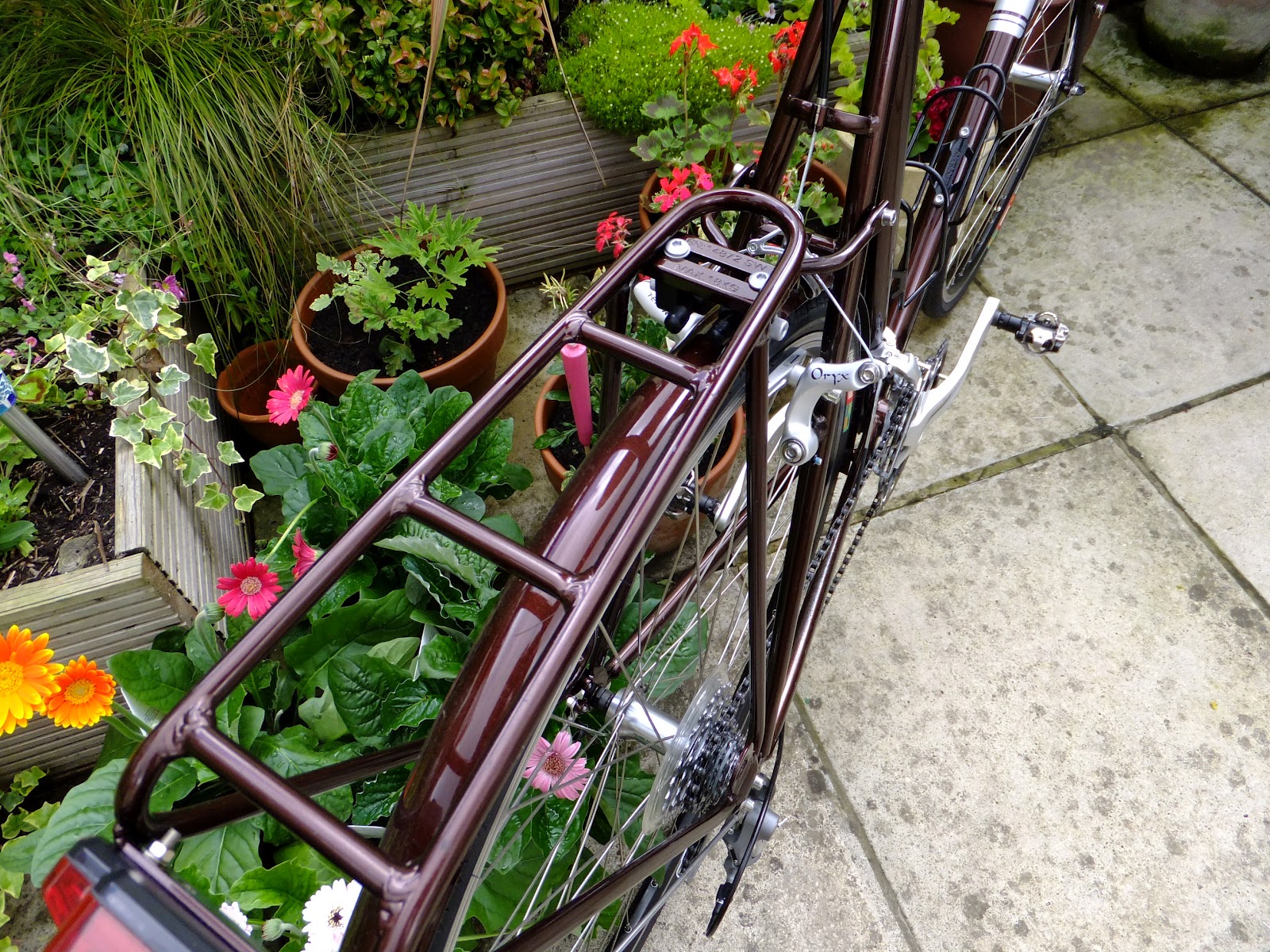
Ubiquitous on bikes of the price range are the budget Alex ACE19 rims; paired on the Aurora with Tiagra 4500 hubs laced with 14g spokes, the spoke tension appeared even and the overall build quality good. 700 x 32c Vittoria Randonneur tyres complete the wheelset which from my own experience are a superb choice for distance touring.
Although a bike is pretty useless without a saddle and pedals, I do wish that there was an option to buy a bike without them; to me it’s like having a stranger buying you a pair of shoes! The supplied saddle is a spongy affair that would be fine for occasional use over short distances; the pedals are rather good quality platform touring pedals complete with clips and straps. But I am forgetting that someone might be buying this bike who has yet to form a preference for such things, in which case both pedals and saddle are a good enough starting point.
Coming soon: How the Aurora performed on a 300km Audax ride
Although a bike is pretty useless without a saddle and pedals, I do wish that there was an option to buy a bike without them; to me it’s like having a stranger buying you a pair of shoes! The supplied saddle is a spongy affair that would be fine for occasional use over short distances; the pedals are rather good quality platform touring pedals complete with clips and straps. But I am forgetting that someone might be buying this bike who has yet to form a preference for such things, in which case both pedals and saddle are a good enough starting point.
Coming soon: How the Aurora performed on a 300km Audax ride
July 17, 2012
A Challenge for the Uncompetitive Cyclist - Part 4, A Sleepless Night
A 300km day ride, by Audax standards would appear to be something of a middle distance event, which gives some indication of the madness of long distance cycling. Although I had registered the planned 322km ride to Tavistock with AudaxUK, I was by no means certain that I would be able to complete it within the required 22 hours 22 minutes for it to be officially recorded as an Audax ride.
The purpose of the trip was a weekend with family in Tavistock and the target was to arrive in time for the wine and curry feast planned for Friday night. I had decided to use the Jamis Aurora for the ride, a wise choice in that the Aurora is a lightweight steel framed tourer but not so wise in that this was a new bike that I hadn't previously taken further than 30 miles. It was prepped for the ride with dyno hub wheel and lighting from my workaday bike and a single small rear pannier for tools and food. I set off at 17:50 on Thursday night and wanting to get away to a good start I braved the A4 through Reading towards Woolhampton where I would take up the B and C roads that would form the rest of the route. The weather was not ideal, heavy rain and a 10 – 15 mph headwind, but the hedgerows and trees lining the minor roads did provide some protection from the worst of it. It was properly dark at 22:00 when I reached my first planned fuel stop which was fish and chips at Pewsey. After this 30 minute meal break in Pewsey's well appointed bus shelter I was away into the darkness heading for my next rest stop at Glastonbury.
Over the following 5 hours I had the roads to myself, save for the occasional fox and badger that would leap out in front of me, often perilously close to getting run over. Thankfully my road kill tally remained at zero, though I knew it was probably me who would have come of worse if my nocturnal friends hadn't have been quite so deft.
At just over the half way point and at around 04:00 I passed Glastonbury on the A39 and headed for the Golden Arches of the 24hr McDonalds and my second fuel stop. I had thought I might take a nap at this point, but the unnecessarily loud music and bright lights meant this wasn't going to happen; a deliberate ploy by the pesky clown I wager!
By the time I left Glastonbury it was daylight, the rain had stopped and my first unplanned foray into a muddy field happened! I had tried to plan the route to avoid such delays but I was just so glad to be wearing my waterproof sandals!
By this stage I was getting a little tired and decided to skip my planned 3rd fuel stop at Tesco’s in Cullompton and press on to Bradninch and refuel with my own supplies in the delightful thatched bus shelter at Bradninch.
During the ride I came to appreciate the availability of bus shelters; for sure cafes and coffee bars are mostly a more enticing proposition, however they are rare on back roads and after for cycling in the rain for over 15 hours a bedraggled and dirt caked cyclist is perhaps not the most favoured of clientele. The bus stop at Shobrooke in Devon was a superbly appointed example and it was a hard not to get ensconced for a "power nap".
From Shobrooke it was onto Okehampton and the Granite Way that forms part of National Cycle Route 27 that provides a sedate passage around Dartmoor before the final descent into Tavistock.
The Aurora had proven itself to be a comfortable and reliable machine and the promise of wine and curry had kept me going when energy levels started to fall. I completed the ride in 22 hours with over 40 minutes to spare within the Audax permitted time over the 300km distance. Time enough for a couple of hours kip before the curry was served!
Apologies for the lack of my own pictures in this post but for the most part it was dark and raining so many thanks to the bus shelter snappers as credited!
The purpose of the trip was a weekend with family in Tavistock and the target was to arrive in time for the wine and curry feast planned for Friday night. I had decided to use the Jamis Aurora for the ride, a wise choice in that the Aurora is a lightweight steel framed tourer but not so wise in that this was a new bike that I hadn't previously taken further than 30 miles. It was prepped for the ride with dyno hub wheel and lighting from my workaday bike and a single small rear pannier for tools and food. I set off at 17:50 on Thursday night and wanting to get away to a good start I braved the A4 through Reading towards Woolhampton where I would take up the B and C roads that would form the rest of the route. The weather was not ideal, heavy rain and a 10 – 15 mph headwind, but the hedgerows and trees lining the minor roads did provide some protection from the worst of it. It was properly dark at 22:00 when I reached my first planned fuel stop which was fish and chips at Pewsey. After this 30 minute meal break in Pewsey's well appointed bus shelter I was away into the darkness heading for my next rest stop at Glastonbury.
 |
| Bus Shelter at Pewsey © Copyright Chris Talbot |
 |
| Luckily there was a bridge! |
By this stage I was getting a little tired and decided to skip my planned 3rd fuel stop at Tesco’s in Cullompton and press on to Bradninch and refuel with my own supplies in the delightful thatched bus shelter at Bradninch.
 |
| Bradninch Bus Shelter © Copyright Sarah Smith |
During the ride I came to appreciate the availability of bus shelters; for sure cafes and coffee bars are mostly a more enticing proposition, however they are rare on back roads and after for cycling in the rain for over 15 hours a bedraggled and dirt caked cyclist is perhaps not the most favoured of clientele. The bus stop at Shobrooke in Devon was a superbly appointed example and it was a hard not to get ensconced for a "power nap".
 |
| Shobrooke Bus Shelter © Copyright BazzaDarambler |
 |
| Final Destination! Westbridge Cottages - Tavistock |
Apologies for the lack of my own pictures in this post but for the most part it was dark and raining so many thanks to the bus shelter snappers as credited!
July 11, 2012
A Challenge for the Uncompetitive Cyclist - Part 3, DIY Audax by GPS
Audax events have traditionally required the participant to pass through a series of control stages along a predefined route. To obtain proof of passage the ride would be issued with a “brevet card” which would then get stamped at each control point. A completed brevet card for therefore provide proof that the rider had completed the ride and the required distance to be awarded the brevet for that particular event.
In recent years Audax has acknowledge the use of GPS devices and their ability to record detailed track information, including time, speed, elevation and positional data. Audax UK now permit riders to plan their own Audax rides and submit GPS track logs in place of the traditional brevet cards as evidence that the agreed route and distance were completed within the time allowed.
Initially when I found out about this type of event I did think why anyone would want to faff about with membership, entry forms and virtual brevet cards just to have a ride “officially” recorded as a qualifying Audax ride? However, if you’re interested in planning and riding long distances, the extra discipline required to plan and complete them within Audax regulations does bring a new dimension and perhaps an element of madness to what might otherwise be just another casual cycle tour.
Tomorrow evening I set off on a 300km DIY Audax by GPS for Tavistock, this will be the furthest I’ve cycled within the maximum time allowed of 22hrs. Here’s hoping my bicycle pump doesn’t get stuck in my trouser leg (for the Monty Python fans amongst you).
In recent years Audax has acknowledge the use of GPS devices and their ability to record detailed track information, including time, speed, elevation and positional data. Audax UK now permit riders to plan their own Audax rides and submit GPS track logs in place of the traditional brevet cards as evidence that the agreed route and distance were completed within the time allowed.
Initially when I found out about this type of event I did think why anyone would want to faff about with membership, entry forms and virtual brevet cards just to have a ride “officially” recorded as a qualifying Audax ride? However, if you’re interested in planning and riding long distances, the extra discipline required to plan and complete them within Audax regulations does bring a new dimension and perhaps an element of madness to what might otherwise be just another casual cycle tour.
Tomorrow evening I set off on a 300km DIY Audax by GPS for Tavistock, this will be the furthest I’ve cycled within the maximum time allowed of 22hrs. Here’s hoping my bicycle pump doesn’t get stuck in my trouser leg (for the Monty Python fans amongst you).
Subscribe to:
Posts (Atom)